
Every Mortal Kombat Game Ever Made — And How to Play Them All Right Now
Every Mortal Kombat Game Ever Made — And How to Play Them All Right Now
Thirty years of blood, brutality, and controversy. From a single arcade cabinet in 1992 to one of the highest-grossing entertainment franchises on earth — this is how Mortal Kombat happened, and why it refuses to die.
Have you seen our Minibeast Mortal Kombat Arcade Machine?
It Started as a Van Damme Game
The story starts with a movie pitch. In 1991, Midway Games programmer Ed Boon and artist John Tobias were tasked with building a one-on-one fighting game to compete with Capcom’s Street Fighter II, which was dominating arcades worldwide. Their first idea was a game starring Jean-Claude Van Damme — a digitised action game built around the actor’s likeness. Van Damme passed.
What replaced him was stranger and more original. Boon and Tobias created a cast of digitised fighters — real actors and stunt performers photographed frame by frame and converted into sprites. The technology gave MK a hyper-realistic, almost cinematic look at a time when most fighting games were illustrated. Combined with deliberately extreme violence — decapitations, impalements, rivers of pixelated blood — the game was unlike anything in arcades.
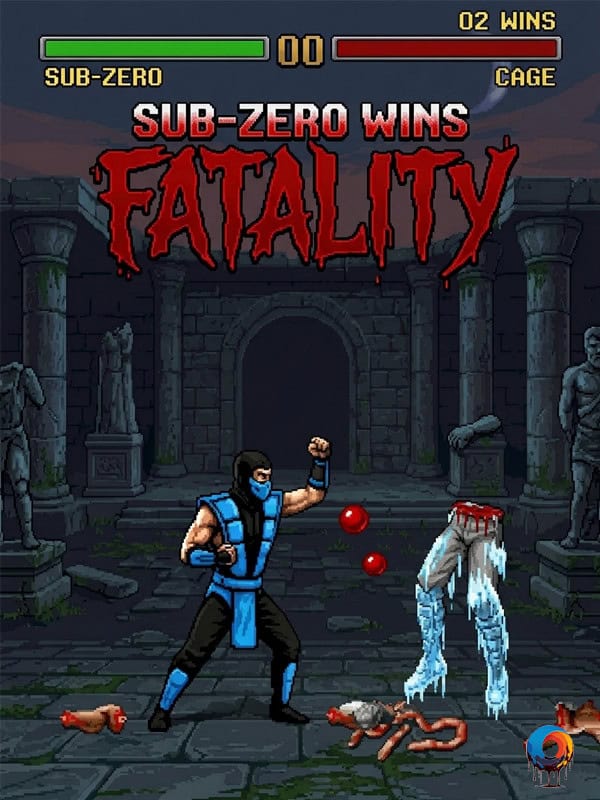
The defining invention came from Tobias: after defeating an opponent, players could execute a special button sequence to perform a “Fatality” — a gruesome finishing move that killed the opponent in spectacular fashion. It was gratuitous. It was designed to shock. It worked.
John Tobias conceived the Fatality as a final moment of mastery — proof you’d completely dominated your opponent. Ed Boon programmed Sub-Zero’s spine-rip finishing move first, as a test. When players discovered it in arcades, the reaction was immediate and electric. Lines formed at machines specifically for that moment. The controversy that followed was, by design, free advertising on a scale neither Midway nor any publisher had seen before.

Congress Tried to Stop It. That Made It Bigger.
The original arcade release in October 1992 spread through North American arcades faster than any Midway title before it. The digitised art style made it unmistakable on a crowded arcade floor, and the word-of-mouth around Fatalities gave every player a reason to pull a stranger over and say “watch this.”
The first major inflection point was the console port war of 1993. When Mortal Kombat came to Super Nintendo and Sega Mega Drive/Genesis simultaneously, the two versions made national news — not because of the game, but because of what Nintendo removed. The SNES version replaced blood with grey “sweat” and censored the most graphic Fatalities. Sega shipped the full version, blood and all, behind a parental access code. The result was a natural experiment: Sega’s version outsold Nintendo’s by a significant margin. Parents knew which one to buy because politicians told them not to.
“These games are teaching our children that ultraviolence is acceptable entertainment. We are talking about games that simulate murder, decapitation, and mutilation.”
US Senate Hearing, December 1993
That Senate hearing — led by Senators Joe Lieberman and Herb Kohl — directly led to the creation of the Entertainment Software Rating Board (ESRB) in 1994. Mortal Kombat was the primary exhibit. The franchise had, within two years of its release, changed the legal and regulatory landscape of the entire video game industry.
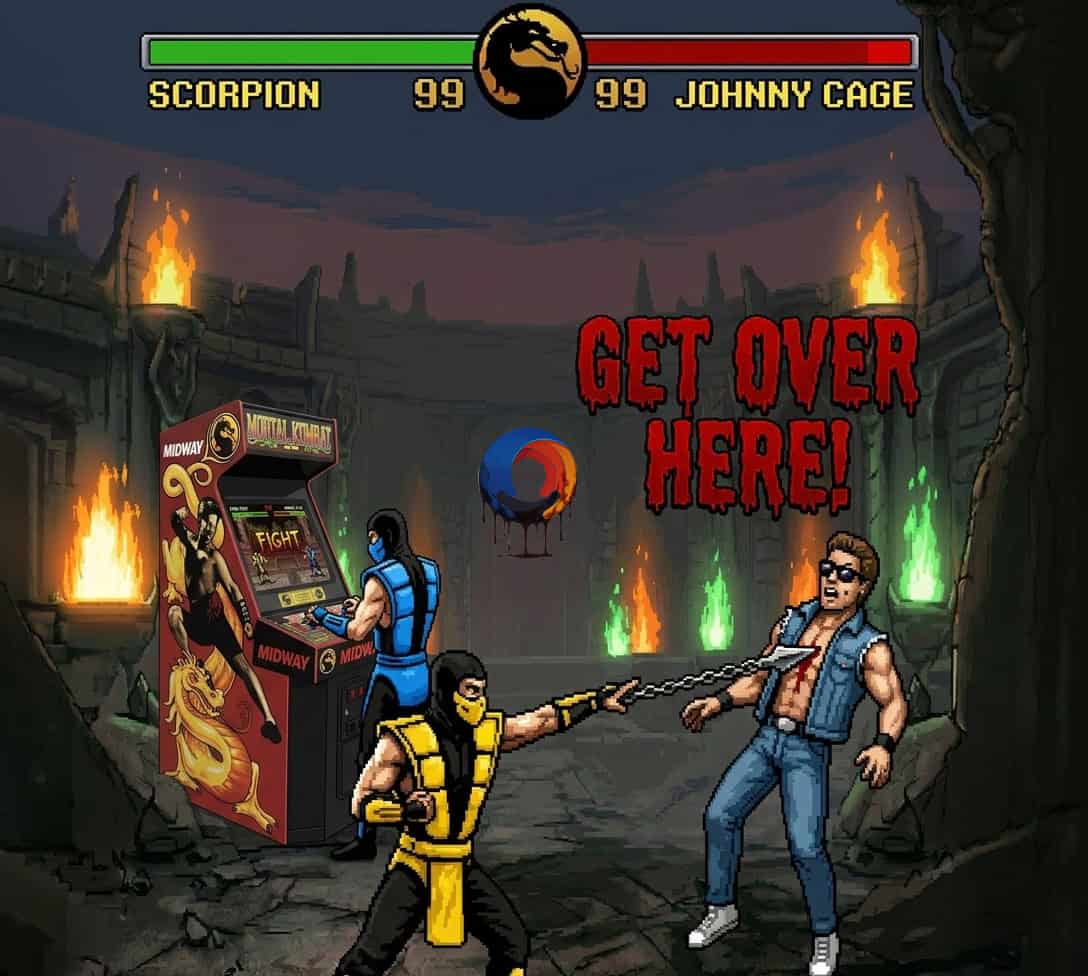
Simultaneously, Mortal Kombat penetrated popular culture at a rate unusual for any game. Scorpion’s “GET OVER HERE!” spear throw became one of the most imitated moments in arcade history. Children knew these characters before they’d ever played the game.
The Five Biggest Titles
Best-selling entry in the franchise. 12+ million copies. Delivered on story, visuals, and the deepest customisation system in the series.
The reboot that saved the franchise after Midway’s collapse. 3 million copies in its first year. Critics called it the best fighting game of its generation.
Arcade peak. Became the highest-grossing arcade game of 1993–94. One of the best-selling titles on both SNES and Genesis.
5+ million copies sold. Introduced character variations that changed competitive play. Guest characters broadened the audience beyond core fans.
The original. Generated over $570 million AUD equivalent in arcade revenue. Console port sold over 6.5 million copies across SNES, Genesis, and Game Boy.
Moves and Features That Changed Everything
Defined the franchise. Triggered US Senate hearings. Created the ESRB rating system. Players queued at cabinets specifically to see them.
Real actors photographed frame by frame. No other major fighting game had done this at scale. Made MK visually unmistakable on any arcade floor.
Comedic counterpoint to Fatalities. Turned opponents into babies or performed absurd friendly acts. Created viral word-of-mouth in schools and arcades.
A first-person unlockables graveyard. Players spent hours discovering concept art, costumes, and audio clips. Set the template for fighting game bonus content.
Slow-motion bone-breaking super moves shown via X-ray damage. Immediately iconic. Gave every character a signature cinematic moment mid-match.
Freddy, Jason, Alien, Predator, Terminator, RoboCop, Spawn — all with franchise-appropriate Fatalities. Raised cultural visibility far beyond gaming.
A comeback mechanic available only when health was critically low. Added genuine risk/reward tension to high-level competitive matches.
Assist characters called in mid-match, separate from the main roster. Fundamentally changed team strategy and opened roster possibilities.
Headlines & Reactions
“The most detailed, most violent, most controversial and most addictive game in existence.”
Electronic Gaming Monthly, 1993
“Nintendo’s bowdlerised version is a hollow shell. Without the Fatalities, you have a mediocre fighter. With them, you have a cultural event.”
GamePro Magazine, 1993
“Mortal Kombat is this year’s most controversial toy. Parents are alarmed. Congress is watching. And children can’t stop playing it.”
TIME Magazine, 1993
“A stunning return to form. One of the finest fighting games of this generation.”
IGN — MK9 Review, 9.0/10, 2011
“I was 9 when MK came out. My parents didn’t know I’d seen it until I started doing the Scorpion spear throw at school and yelling GET OVER HERE.”
Reddit r/mortalkombat, 2021
“I have never seen anything pull in quarters the way Mortal Kombat does. Kids bring friends just to watch the finishing moves.”
Arcade operator, Chicago — RePlay Magazine, 1993
Arcade · 3D · NetherRealm
Arcade · SNES · Genesis · Game Boy
The original. Seven fighters, digitised sprites, the first Fatalities. Triggered congressional hearings and launched a cultural phenomenon.
Arcade · SNES · Genesis · Game Boy
Expanded roster, deeper lore, Babalities and Friendships. The arcade peak of the series — highest-grossing arcade title of its release year.
Arcade · SNES · Genesis · PS1 · PC
Added the Run button for faster gameplay. Controversial for omitting fan-favourites including Scorpion.
Arcade · SNES · Genesis · Saturn
Restored the missing roster. Added Scorpion, Kitana, Jade, Mileena. The definitive arcade-era entry.
PS1 · N64 · PC · Saturn
Over 30 playable characters from the first three games. The final chapter of the 2D digitised era.
Arcade · PS1 · N64 · PC
The series’ first step into polygonal 3D. Introduced weapons combat. Mixed reception — the transition was rough, but necessary.
PS2 · Xbox · GameCube · GBA
Full pivot to home consoles. Multiple fighting styles per character. Introduced the Krypt. Best-received 3D-era entry.
PS2 · Xbox · GameCube · PSP
Added Konquest RPG campaign. Chess Kombat and Puzzle Kombat mini-games. One of the highest-selling 3D-era entries.
PS2 · Xbox · Wii
62 fighters — every character up to that point. Create-A-Fatality replaced presets. Ended the classic MK universe’s storyline.
PS3 · Xbox 360 · Vita · PC
The reboot. Returned to 2D gameplay. Retold the first three games in an alternate timeline. Introduced X-Ray moves. Saved the franchise.
PS4 · Xbox One · PC · Mobile
Character variations — three distinct fighting styles per fighter. Advanced the story 25 years. Horror guest characters. 5+ million copies.
PS4 · Xbox · Switch · PC · PS5
Time manipulation story. Gear customisation. Fatal Blow comeback mechanic. Best-selling MK title ever — 12+ million copies.
PS5 · Xbox Series · Switch · PC
Universe reset. Liu Kang reshapes history. Introduces Kameo Fighters — assist characters called mid-match. The series continues.
Every Mortal Kombat Game Ever Made
| Year | Title | Era | Platforms |
|---|---|---|---|
| Arcade Era | |||
| 1992 | Mortal Kombat | Arcade | Arcade, SNES, Genesis, Game Boy, PC, Amiga |
| 1993 | Mortal Kombat II | Arcade | Arcade, SNES, Genesis, Game Boy, PC, Game Gear |
| 1995 | Mortal Kombat 3 | Arcade | Arcade, SNES, Genesis, PS1, PC, Game Boy |
| 1995 | Ultimate Mortal Kombat 3 | Arcade | Arcade, SNES, Genesis, Saturn, Mobile |
| 1996 | Mortal Kombat Trilogy | Arcade | PS1, N64, PC, Saturn |
| 1996 | MK Mythologies: Sub-Zero | Spinoff | PS1, N64 |
| 3D Era | |||
| 1997 | Mortal Kombat 4 | 3D | Arcade, PS1, N64, PC, Game Boy Color |
| 1999 | Mortal Kombat Gold | 3D | Dreamcast |
| 2000 | MK: Special Forces | Spinoff | PS1 |
| 2002 | MK: Deadly Alliance | 3D | PS2, Xbox, GameCube, GBA, PC |
| 2004 | MK: Deception | 3D | PS2, Xbox, GameCube, PSP |
| 2005 | MK: Shaolin Monks | Spinoff | PS2, Xbox |
| 2006 | MK: Armageddon | 3D | PS2, Xbox, Wii |
| 2008 | MK vs DC Universe | 3D | PS3, Xbox 360 |
| NetherRealm Era | |||
| 2011 | Mortal Kombat (MK9) | Modern | PS3, Xbox 360, Vita, PC |
| 2015 | Mortal Kombat X | Modern | PS4, Xbox One, PC, Mobile |
| 2019 | Mortal Kombat 11 | Modern | PS4, Xbox One, Switch, PC, PS5, Xbox Series |
| 2023 | Mortal Kombat 1 | Modern | PS5, Xbox Series, Switch, PC |
| Films & Media | |||
| 1995 | Mortal Kombat (film) | Film | Cinema — $122M worldwide box office |
| 1997 | MK: Annihilation | Film | Cinema — poorly received sequel |
| 2021 | Mortal Kombat (reboot film) | Film | Cinema + HBO Max — R-rated, faithful to source |
Why Mortal Kombat Still Matters
Mortal Kombat’s thirty-year run is built on a single, simple insight: the reaction is part of the game. From the first players crowding around an arcade machine to watch a spine-rip, to modern players sharing Fatality clips on social media within hours of a release, the franchise has always understood that combat isn’t purely mechanical. It’s theatrical.
The series created the ESRB — the ratings body that governs every game sold in North America. It demonstrated that controversy, properly harnessed, is marketing. It proved that a fighting game could carry a serialised story across decades. It invented a content model — the Krypt, unlockable lore, alternate costumes behind progression — that fighting games still use today.
Mortal Kombat has now sold over 73 million units across all platforms. The franchise — including films, animated series, comics, merchandise, and licensing — is valued at over $3 billion AUD. Every major console generation since 1992 has had a Mortal Kombat title. That record is unmatched in the fighting game genre.