
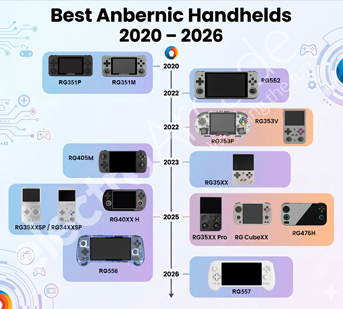
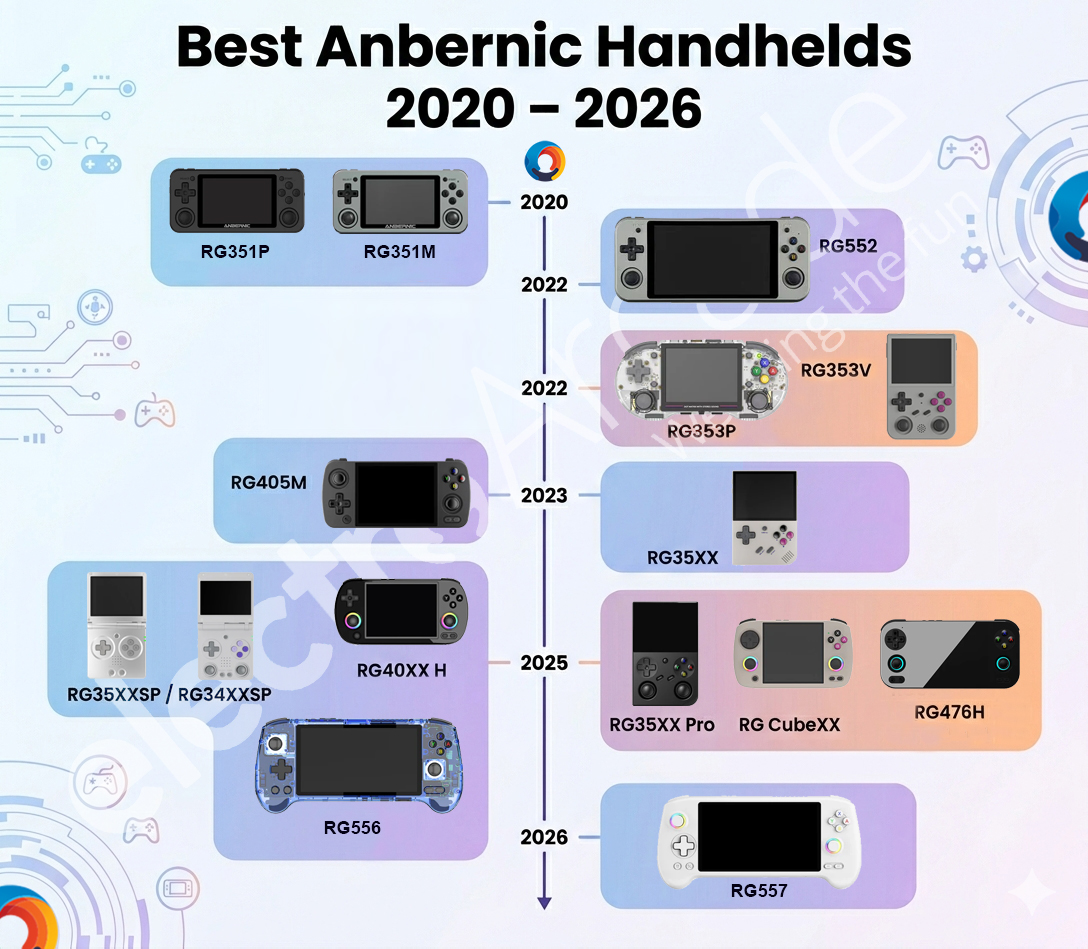
The Best Anbernic Handheld Consoles Ranked: Australia’s Definitive Guide 2026
6+
Years Covered
12+
Retro Gaming Consoles Ranked
$117
Budget Entry (AUD)
$579
Flagship Top End (AUD)
By Paul, Electro Arcade founder · Updated October 2026
The Best Anbernic Handheld Consoles Ranked
Six years of Anbernic handheld consoles. Dozens of models. Our 2026 Best Anbernic guide cuts through the noise — ranked, tested, and priced in AUD for Australian buyers. Every unit we sell is individually unboxed and tested at our Melbourne HQ before it reaches you, backed by a 12-month Australian warranty and genuine local parts support. We’ve been an official Anbernic reseller since 2020.
Want the most power? The RG557 is Anbernic’s most powerful and most expensive handheld, but the far more affordable RG556 is the one most players choose.
Jump to: How to choose · RG556 vs RG476H · RG557 · Budget range · RG CubeXX · RG405M · Legacy models · FAQs
Three Questions.
The Right Handheld.
Which Anbernic
Suits You?
| RG476H | One handheld that does almost everything and still fits a pocket |
| RG556 | A premium big-screen experience |
| RG40XX V | A big-screen budget favourite, and one of our best sellers |
| RG557 | Maximum power for full-speed PS2 and Wii |
| RG405M | A premium metal build in a compact size |
| RG CubeXX | Game Boy and square-screen classics |
| RG35XX Pro | The best-value way to start |
| RG35XX SP | A pocket clamshell for Game Boy Advance fans |
| RG552 | A big touchscreen for Android and Linux in one |
| RG353P | A SNES-style horizontal classic |
| RG505 | An OLED widescreen for PSP fans |
| Win600 | Windows games and a full PC in your hands |
2020 – 2021 · Legacy Essential
RG351P / RG351M


The device that put Anbernic on the map. The RG351P was enormously popular due to its price point, build quality, and ability to run pixel-perfect GBA games. The RG351M followed with a full aluminium shell and built-in WiFi. Both run on the Rockchip RK3326 and handle everything up to PS1 comfortably, with variable results on N64 and PSP.
Popular Mechanics selected the RG351P as the “best handheld game system for emulation.” The 3:2 screen ratio remains ideal for GBA purists — used units are still worth picking up for that alone.
| Chip | Rockchip RK3326 |
| Screen | 3.5″ IPS · 3:2 ratio |
| OS | Linux (351Elec / ArkOS) |
| Ceiling | PS1 solid · N64 variable |
| Price (EA) | RG351P from $156 AUD · RG351M $193 AUD |
Late 2021 – 2022 · First Android Model
RG552
Anbernic’s first Android device and a significant hardware leap. The RG552 features a superb 5.36-inch 1920×1152 IPS touchscreen and a six-core RK3399 chipset, enabling Dreamcast and Saturn emulation that previously wasn’t viable. It was also the first Anbernic to dual-boot Linux and Android.
The trade-offs: battery life of around four hours and no 5GHz WiFi support. Well-regarded but never matched the cultural impact of the 351 series, partly due to the higher price and the arrival of the Steam Deck.
| Chip | Rockchip RK3399 (6-core) |
| Screen | 5.36″ IPS 1920×1152 |
| OS | Android + Linux dual-boot |
| Battery | ~4 hours |
| Price (EA) | $358 AUD |
2022 – 2023 · Vertical Refinement
RG353V / RG353P

Refined the vertical Game Boy-style form factor. The RK3566 chip pushed the emulation ceiling to Dreamcast. The Android version includes a touchscreen and shortcuts to jump between menus and switch ABXY layouts on the fly. WiFi and Bluetooth on both versions enables RetroAchievements and wireless controller support.
Performance on N64 is unreliable — step up to the RG405M for that. The persistent downside: shoulder buttons that were fragile, close together, and activated with almost no pressure. The Linux-only RG353VS was better value for most users running custom firmware.
| Chip | Rockchip RK3566 |
| Screen | 3.5″ IPS 640×480 · 4:3 |
| OS | Android + Linux (dual-boot) |
| Ceiling | Dreamcast · N64 unreliable |
| Price (EA) | RG353V $205 AUD · RG353P $222 AUD |
2023 · Recommended
RG405M

Widely considered one of Anbernic’s best-executed devices. The Unisoc Tiger T618 chip reaches PS2 and GameCube. The metal shell covers virtually the entire chassis in aluminium — Anbernic’s trick being that one of the rear rubber pads lacks metal underneath to allow wireless communication without affecting aesthetics.
Hall effect joysticks, solid build, Android 12. Main community criticism: D-pad below the left stick (Switch-style layout) rather than the traditional position above.
| Chip | Unisoc Tiger T618 |
| Shell | Full aluminium |
| OS | Android 12 |
| Ceiling | PS2 / GameCube (partial) |
| Price (EA) | $348 AUD |
2023 – 2025 · Budget Range
RG35XX Series / RG40XX V
The budget line that flooded the market, all running the Allwinner H700 chip. Anbernic released so many devices in this line it became hard to track. Every XX-series device except the CubeXX has cardinal snapping issues on the analog sticks. Ranked within the line:
Rank 01 — Best of Line
RG40XX V Top Pick
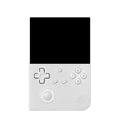
The sweet spot of the budget range, and one of our best sellers. The big 4-inch 4:3 screen makes PS1 and Dreamcast games easier to read and enjoy, in a comfortable vertical body with Wi-Fi, HDMI out and rumble. One analogue stick handles most retro games; want two? See the RG35XX Pro.
In stock at Electro Arcade · RG40XX V Specifications →
Rank 02 — Best for Portability
RG35XXSP / RG34XXSP Recommended
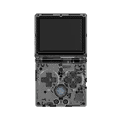
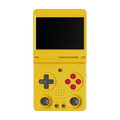
Clamshell GBA SP form factor. Screen protected when closed, genuinely pocketable, capable up to Dreamcast. The RG34XXSP upgraded the screen, added RAM, and introduced hall effect joysticks — making it the pick of the two.
RG35XXSP $115 AUD at Electro Arcade
Rank 03 — Best Dual-Stick Budget
RG35XX Pro Recommended
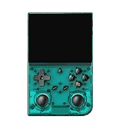
Vertical form factor with dual analogue sticks, WiFi 5, Bluetooth 4.2, and HDMI out. The correct pick for anyone who wants a vertical device with connectivity at the budget price point. Most polished iteration of the RG35XX series — no groundbreaking leap, but everything works. Same 3.5-inch screen means PS1 and Dreamcast text readability limitations remain.
$108 AUD at Electro Arcade
Rank 04 — Entry Level
RG35XX Plus Superseded

Largely undercut by the Pro at a near-identical price. Hard to recommend over it unless found significantly cheaper. Sturdy, handles PS1 without issue, but no dual analog sticks.
$117 AUD at Electro Arcade (on backorder)
Rank 05 — Nostalgic Flashback
RG280V Collector’s Pick
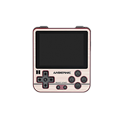
Before the XX-series flooded the market, the RG280V was the device that reminded a generation why handheld gaming mattered. Its 2.8-inch screen, wide horizontal grip, and near-zero bulk put it in the same hand position as the original Nintendo Game & Watch — flat, thin, held parallel to the ground, no hinge, no bulk. That form factor is deliberate. If you grew up flipping open a Donkey Kong Jr. Game & Watch or an Octopus on the school bus in the 80s, picking up the RG280V triggers that muscle memory immediately. The library running on it is exponentially deeper — full Mega Drive, arcade, GBA — but the way it sits in your hands is unmistakably that era. Not the most capable device in the range. Not intended to be.
For the nostalgia. The games are a bonus.
2024 · Cult Favourite
RG CubeXX
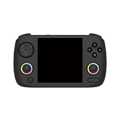
An oddity that became a cult favourite. Reviewers praised its perfectly balanced weight and a screen that handles both standard play and vertical SHMUP orientation — letting you rotate the device for arcade games the way they were meant to be played.
Not the most powerful device in the range, but punches well above its class in usability and screen quality for the price. The only XX-series device without the analog stick cardinal snapping issue.
| Chip | Allwinner H700 |
| Screen | 3.95″ IPS · 1:1 square |
| OS | Linux / Android |
| Standout | No cardinal snap · SHMUP rotation |
| Price (EA) | $349 AUD |
2024 – 2025 · Mid-Tier Flagship
RG556 vs RG476H
These two sit in the same price bracket and are worth comparing directly. Same T820 chip, different priorities. For most buyers the RG476H supersedes the RG556.
RG556 — 2024 Flagship

| Screen | 5.5″ AMOLED 1080p · 16:9 |
| Chip | Unisoc T820 · 8GB RAM |
| Battery | 5500mAh |
| Weakness | Too large for most pockets |
| Price (EA) | $369 AUD |
Better for media, streaming, and 16:9 Android gaming. AMOLED advantage is real but not decisive for 4:3 retro content — which is what most people buy Anbernic for.
RG476H — 2025 Recommended Top Pick

| Screen | 4.7″ LTPS 120Hz 1280×960 · 4:3 |
| Chip | Unisoc T820 · 8GB RAM |
| Battery | 5000mAh |
| Build | Full-glass front · first for Anbernic |
| Price (EA) | $328 AUD |
Superior for retro gaming. 4:3 screen optimised for the content, 120Hz panel, genuinely pocketable. PS2 and GameCube inconsistent on demanding titles. Android launcher remains Anbernic’s persistent weak point across the entire range.
2025 · Current Flagship
RG557

The current performance flagship. The Dimensity 8300 chip sits well above the T820 found in the RG476H and RG556, making this the device for players who genuinely need PS2 and Wii at full speed. The 5.5-inch AMOLED screen and 5500mAh battery round out a premium package.
The trade-off is the same as the RG556: size kills pocketability. This one lives in a bag, not a pocket. For pure emulation performance at any price in the Anbernic range, nothing beats it.
| Chip | MediaTek Dimensity 8300 |
| Screen | 5.5″ AMOLED 1920×1080 |
| RAM | 12GB DDR5 |
| Battery | 5500mAh |
| Price (EA) | $579 AUD |
Know Before You Buy · Hardware Quirk Explained
Anbernic Cardinal Snapping — What It Is & When It Matters
Cardinal snapping is an often firmware-based quirk where analog sticks on certain Anbernic devices force input toward the four cardinal directions — Up, Down, Left, Right — rather than registering smooth diagonal movement. On affected devices, pushing the stick at a 45-degree angle snaps it to the nearest cardinal axis instead of registering the true diagonal.
It matters most in 3D games requiring precise analog movement — Super Mario 64, racing games, and anything with free-look camera controls. For 2D gaming across NES, SNES, GBA, and PS1, it is largely irrelevant since those games use eight-directional input anyway.
The good news: on most affected Anbernic devices, this is a firmware issue rather than a hardware defect. Installing custom firmware such as muOS or ROCKNIX resolves cardinal snapping entirely on most units. The RG CubeXX is the only XX-series device where cardinal snapping is not present on stock firmware.
| Affected Devices | RG35XX H, RG40XX V, RG35XX Plus, RG35XX Pro, RG35XXSP & most H700 XX-series |
| Not Affected | RG CubeXX, RG405M, RG476H, RG556, RG557 |
| Impact on 2D Gaming | None — NES, SNES, GBA, PS1 unaffected |
| Impact on 3D Gaming | Noticeable — N64, PSP, 3D PS1 titles |
| Fix Available | Yes — muOS, ROCKNIX, or Knulli custom firmware resolves on most units |
When It Doesn’t Matter
2D Gaming No Impact
NES, SNES, Mega Drive, Game Boy, GBA, and PS1 2D titles all use eight-directional or D-pad-style input. Cardinal snapping has zero effect on these games. The vast majority of what the XX-series handles daily falls into this category.
When It Does Matter
3D & Analog Games Noticeable
N64 titles like Super Mario 64, Mario Kart 64, and games requiring fine analog gradients will feel imprecise. PSP and 3D PS1 titles with free camera movement are also affected. If this is your primary use case, step up to the RG405M, RG476H, or RG556 — none of which exhibit this behaviour.
The Fix
Custom Firmware Recommended
Installing muOS, ROCKNIX, or Knulli custom firmware resolves cardinal snapping on most affected XX-series devices. Electro Arcade stocks pre-configured firmware cards — the fastest way to get your device running correctly out of the box without any technical setup.
Six years of Anbernic releases distilled into one verdict: the best device is the one matched to your era. Budget 2D gaming starts at $117. Flagship PS2 and Wii emulation ends at $579. Everything in between has a right answer.
Six-Year Pattern
What The Data Shows
Anbernic’s most respected devices have consistently been those where build quality matched the hardware tier — the metal-shell 351M, 405M, and 477M — and the budget devices that delivered disproportionate value for 2D-era gaming.
Persistent weaknesses across six years: stock OS quality across the entire range, shoulder button ergonomics on vertical models, analog stick cardinal snapping on most XX-series devices, and a naming convention that has become almost deliberately confusing.
Every console in this guide is stocked in our Melbourne warehouse, individually tested before dispatch, and backed by a 12-month Australian warranty with genuine parts support.
Anbernic FAQs
What is the best Anbernic handheld in 2026?
For most retro players it’s the Anbernic RG476H ($328): a 4.7″ 120 Hz screen in the 4:3 shape most classic games were made for, the T820 chip for PS2 and GameCube, and a genuinely pocketable body. Want a bigger screen? The RG556 ($369) gives you a 5.48″ AMOLED on the same T820 chip, far more affordable than Anbernic’s most powerful (and most expensive) handheld, the RG557 ($579).
Which Anbernic should I buy on a budget?
The RG40XX V is our budget favourite: a big 4″ screen in a comfortable vertical body, with Wi-Fi, HDMI out and rumble. Want two analogue sticks? The RG35XX Pro. Prefer a clamshell that protects its screen? The RG35XX SP.
Which Anbernic plays PS2 and GameCube best?
The RG557 (Dimensity 8300, 12 GB RAM) is Anbernic’s most powerful and most expensive handheld ($579), running PS2 and Wii at full speed. For most players the far more affordable RG556 ($369) and RG476H ($328), both on the T820 chip, are the better buy, handling lighter PS2 and GameCube titles well.
Which Anbernic is best for Game Boy Advance?
The RG35XX SP: a clamshell in the Game Boy Advance SP style that protects its screen when closed and fits a pocket. The older RG351P’s 3:2 screen is also prized by GBA purists for pixel-perfect scaling.
What is cardinal snapping on Anbernic handhelds?
Cardinal snapping makes an analogue stick lock to up, down, left or right instead of registering smooth diagonals. It affects most of Anbernic’s budget XX-series on stock firmware and matters for 3D games like Super Mario 64, not 2D games. Custom firmware such as muOS, ROCKNIX or Knulli fixes it on most units.
Where can I buy Anbernic in Australia with a local warranty?
Electro Arcade in Melbourne has stocked Anbernic for over six years. Every unit is unboxed and tested before dispatch, shipped from our Melbourne warehouse and covered by a 12-month Australian warranty with local parts support.
Should I get a Linux or Android Anbernic?
Choose Linux if you want to switch on and play: it’s simple, fast and ready out of the box. Choose Android if you’d also like streaming apps, the Play Store and more room to tinker.