

The Definitive Top 20 – arguably the best Light Gun Arcade & Console Shooting Games of All Time
Remember the rush of gripping a plastic gun, taking aim at a screen, and feeling like an action hero? Light gun games delivered pure arcade magic that modern gaming rarely captures.
Light gun emulation is bringing arcade’s greatest shooting games back from the dead. These legendary point-and-shoot arcade machine lightgun classics that once ruled arcade floors are now playable again with modern lightgun technology. From PC retro game emulation to Pandora Box light guns, while we all have our favourite or best retro shooter titles, here’s our countdown of the most cherished trigger-happy games that defined an entire generation of arcade and console shooters. I’m sure you’ll find one, if not a few of your favourite Shooters listed below.
20. Wild Gunman (1984)

Publisher: Nintendo
Platforms: NES, Arcade
What Made It Great: Pioneered quick-draw mechanics with Western-themed duels requiring lightning reflexes. The simple concept of outdrawing opponents created intense one-on-one confrontations that captured the essence of classic Western films.
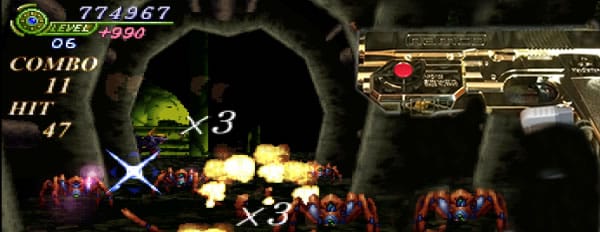
19. Elemental Gearbolt (1997)
Publisher: Working Designs
Platforms: PlayStation
What Made It Great: Brought anime-style storytelling to light gun gaming with RPG elements and multiple storylines. The unique fantasy setting, character development, and branching narratives created a deeper experience than typical arcade shooters.
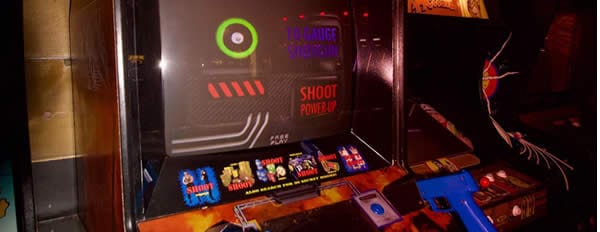
18. Maximum Force (1997)
Publisher: Atari Games
Platforms: Arcade, PlayStation, Sega Saturn
What Made It Great: Delivered over-the-top action movie scenarios with impressive digitised graphics. The variety of missions, from bank robberies to alien invasions, kept gameplay fresh whilst the cinematic presentation enhanced immersion.
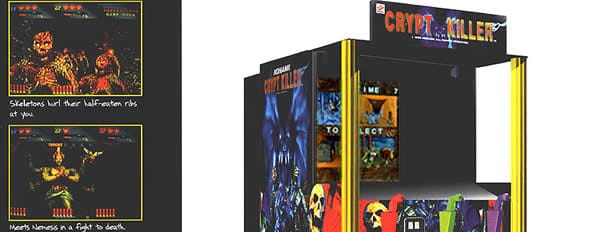
17. Crypt Killer (1995)
Publisher: Konami
Platforms: Arcade, Sega Saturn, PlayStation
What Made It Great: Combined horror themes with adventure game elements, featuring puzzle-solving alongside shooting action. The Egyptian setting and supernatural enemies created a unique atmosphere that differentiated it from military and zombie shooters.
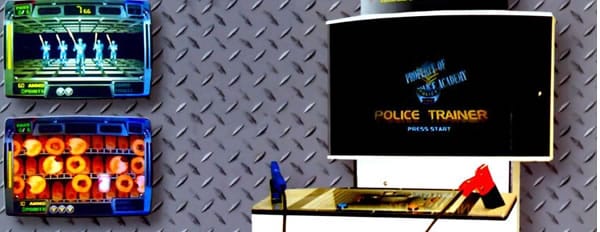
16. Police Trainer (1996)
Publisher: P&P Marketing
Platforms: Arcade
What Made It Great: Created realistic police training scenarios with varied challenges beyond simple shooting. Target identification, hostage situations, and accuracy tests provided educational value alongside entertainment, making it popular in actual training facilities.
15. The House of the Dead III (2002)

Publisher: Sega
Platforms: Arcade, Xbox, PC
What Made It Great: Refined the series’ horror formula with improved graphics and more varied enemy types. The prequel storyline filled in series lore, whilst the introduction of different weapon types added tactical variety to zombie combat.
14. Crisis Zone (1999)

Publisher: Namco
Platforms: Arcade, PlayStation 2
What Made It Great: Advanced the Time Crisis formula with fully destructible environments and enhanced cover mechanics. The urban setting and anti-terrorism storyline felt contemporary, whilst technical improvements delivered the smoothest light gun experience yet.
13. Virtua Cop 2 (1995)

Publisher: Sega
Platforms: Arcade, Sega Saturn, PC
What Made It Great: Refined the original’s 3D graphics with improved enemy AI and more destructible environments. The branching paths and multiple difficulty levels provided replay value, whilst the smooth frame rate maintained precise shooting mechanics.
12. Operation Thunderbolt (1988)

Publisher: Taito
Platforms: Arcade, Amiga, Atari ST, Commodore 64, NES
What Made It Great: Enhanced Operation Wolf’s formula with two-player cooperative gameplay and varied mission objectives. The helicopter sequences and diverse environments expanded the military action template whilst maintaining the resource management tension.
11. House of the Dead (1996)

Publisher: Sega
Platforms: Arcade, Sega Saturn, PC
What Made It Great: Pioneered horror-themed light gun gaming with zombie enemies and branching storylines. Multiple paths through the mansion encouraged exploration, whilst the scientific storyline provided context for the supernatural mayhem.
10. Revolution X (1994)
Featuring Aerosmith’s music and starring the band members themselves, Revolution X was pure 90s excess. Players fought an oppressive regime whilst Aerosmith tracks pumped through arcade speakers, creating an audiovisual assault like no other.
The game succeeded through sheer audacity. Shooting CDs as weapons, rescuing Aerosmith from dystopian forces, and battling to a hard rock soundtrack – Revolution X knew exactly how ridiculous it was and embraced every moment.

Publisher: Midway
Platforms: Arcade, SNES, Genesis, Sega Saturn, PlayStation, 3DO
What Made It Great: Pure 90s excess featuring Aerosmith’s music and the band members themselves. The audacious concept of shooting CDs as weapons whilst battling to hard rock created an audiovisual assault that knew exactly how ridiculous it was.
9. Area 51 (1995)
Area 51 delivered cheesy sci-fi action with impressive digitised graphics and full-motion video sequences. Players battled through the infamous military base, fighting aliens and uncovering government conspiracies with satisfying weapon upgrades throughout.
The game’s charm came from its commitment to B-movie aesthetics. Hammy voice acting, explosive special effects, and genuinely creepy alien designs created an atmosphere that was simultaneously thrilling and hilariously over-the-top.

Publisher: Atari Games
Platforms: Arcade, PlayStation, Sega Saturn, PC
What Made It Great: Delivered sci-fi B-movie thrills with impressive digitised graphics and full-motion video. The conspiracy storyline, weapon upgrades, and genuinely creepy alien designs created an engaging atmosphere that balanced thrills with cheese.
8. Lethal Enforcers (1992)
Lethal Enforcers put players in police shoes, navigating dangerous scenarios where split-second decisions meant life or death. The game’s digitised graphics created realistic environments whilst demanding precise aim to avoid civilian casualties.
Moral complexity set it apart. Players couldn’t simply spray bullets everywhere – innocent bystanders required careful target identification. This added layer of responsibility elevated Lethal Enforcers beyond mindless shooting into strategic gameplay.

Publisher: Konami
Platforms: Arcade, Sega Genesis, SNES, Sega CD
What Made It Great: Added moral complexity to shooting games, requiring players to distinguish between criminals and innocent civilians. The digitised graphics created realistic environments, whilst the police theme elevated it beyond mindless violence.
7. Point Blank (1994)
Point Blank threw traditional shooting games out the window, replacing military scenarios with carnival-style mini-games. Pop balloons, shoot around bombs, hit targets whilst avoiding penalties – each challenge lasted mere seconds but demanded lightning reflexes.
The brilliance was in variety. No two rounds felt identical, keeping players guessing and engaged. Perfect for parties and casual gaming sessions, Point Blank proved that light gun games didn’t need complex storylines to create memorable experiences.

Publisher: Namco
Platforms: Arcade, PlayStation
What Made It Great: Threw traditional shooting conventions aside for carnival-style mini-games. The variety of challenges kept players guessing, whilst its accessibility made it perfect for parties and casual gaming sessions.
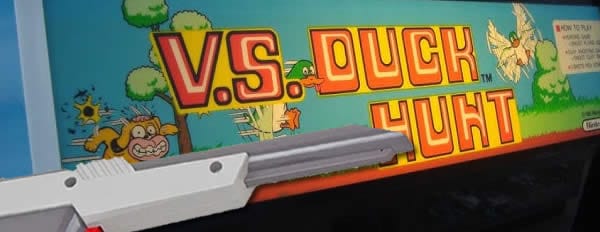
6. Duck Hunt (1984)
Every gamer knows the iconic bark of that smug dog. Duck Hunt introduced millions to light gun gaming with the NES Zapper, turning lounge rooms into hunting grounds. The game’s genius lay in its simplicity – point, shoot, repeat – yet achieving that perfect clay pigeon shot still feels satisfying forty years later.
What made it special was accessibility. Grandparents could pick up the Zapper and immediately understand the goal. The frustration of missing shots and that dog’s mocking laugh created shared family moments that transcended gaming demographics.
Publisher: Nintendo
Platforms: Nintendo Entertainment System, Arcade
What Made It Great: Introduced millions to light gun gaming with the NES Zapper, becoming a cultural phenomenon. Its simple yet addictive gameplay transcended gaming demographics, creating shared family experiences that defined a generation.
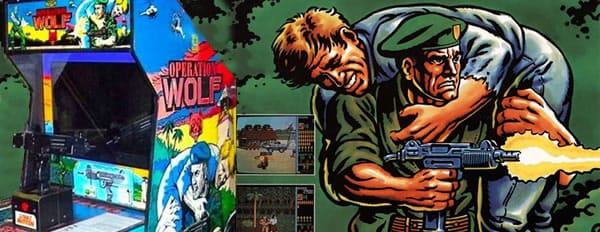
5. Operation Wolf (1987)
Operation Wolf established the template for military light gun games. Players controlled a soldier fighting through enemy territory with limited ammunition, creating genuine tension as bullet counts dwindled during intense firefights.
Innovation came through resource management. Unlike unlimited-ammo competitors, Operation Wolf forced strategic thinking about when to fire and when to conserve bullets. The mounted machine gun controller added physical immersion that made every shot feel weighty and important.
Publisher: Taito
Platforms: Arcade, NES, Amiga, Atari ST, Commodore 64, ZX Spectrum
What Made It Great: Established the military shooter template with limited ammunition creating genuine tension. The mounted machine gun controller provided physical immersion, forcing strategic thinking about resource management during intense firefights.
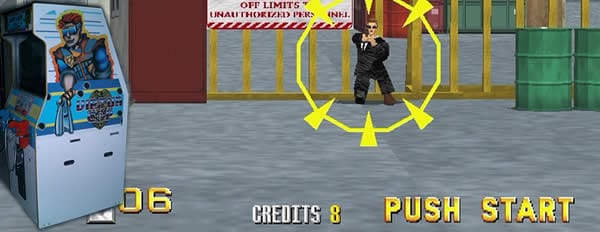
4. Virtua Cop (1994)
Sega’s Virtua Cop brought 3D polygon graphics to light gun gaming, creating smooth, scalable environments that looked incredible for their time. The game’s auto-reload system eliminated tedious magazine management, maintaining constant action flow.
Technical innovation drove its appeal. Enemies could take cover behind realistic 3D objects, creating genuine tactical scenarios. The smooth frame rate and precise hit detection made every shot feel responsive and accurate.
Publisher: Sega
Platforms: Arcade, Sega Saturn, PC
What Made It Great: Pioneered 3D polygon graphics in light gun games, creating smooth scalable environments. The auto-reload system maintained constant action flow, whilst destructible environments and precise hit detection set new technical standards.
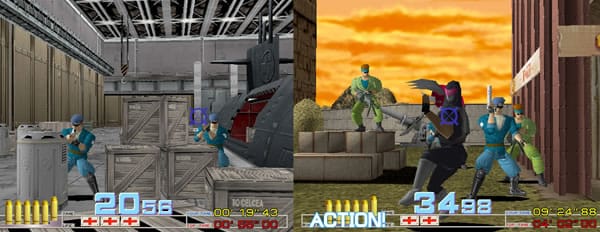
3. Time Crisis (1995)
Time Crisis revolutionised light gun gaming with its foot pedal cover system. Players could duck behind barriers to reload and avoid enemy fire, adding tactical depth previously unseen in the genre.
The innovation was transformative. Instead of standing exposed whilst shooting, players actively participated in cover-based combat. This mechanic influenced countless future games and demonstrated how simple hardware additions could fundamentally change gameplay.
Publisher: Namco
Platforms: Arcade, PlayStation
What Made It Great: Revolutionised light gun gaming with the foot pedal cover system, allowing players to duck behind barriers to reload and avoid enemy fire. This tactical element added strategic depth previously unseen in the genre.
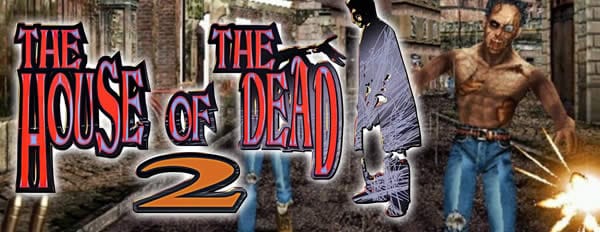
2. House of the Dead 2 (1998)
House of the Dead 2 refined the original’s zombie-blasting formula with improved graphics, branching paths, and memorable boss battles. The game’s cheesy dialogue and hammy voice acting became beloved features rather than flaws.
Horror atmosphere combined with arcade action created unique tension. Players felt genuine dread entering dark corridors whilst maintaining the quick reflexes needed for survival. Multiple endings and branching paths encouraged repeated playthroughs.
Publisher: Sega
Platforms: Arcade, Dreamcast, PC
What Made It Great: Combined horror atmosphere with arcade action, featuring memorable boss battles and branching paths. The deliberately cheesy dialogue and voice acting became beloved features, whilst multiple endings encouraged repeated playthroughs.
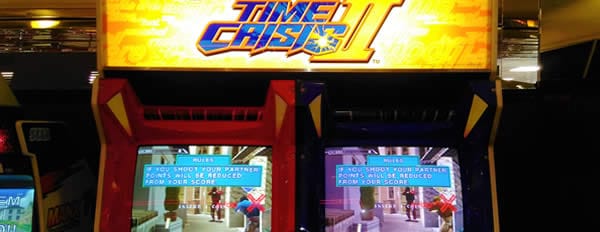
1. Time Crisis 2 (1997)
Time Crisis 2 took everything brilliant about its predecessor and added two-player cooperative gameplay. Friends could work together, covering each other whilst advancing through spectacular set pieces and boss battles.
The cooperative element created gaming magic. Players developed strategies, communicated under pressure, and celebrated spectacular rescue shots together. Time Crisis 2 proved that the best arcade experiences were social experiences, bringing people together through shared challenges and triumphs.
Publisher: Namco
Platforms: Arcade, PlayStation 2
What Made It Great: Perfected cooperative gameplay with dual light guns, refined the cover system mechanics, and delivered cinematic action sequences. The two-player experience created unmatched arcade social gaming, with players working together to overcome spectacular boss battles and rescue scenarios.
Honourable Mentions
Confidential Mission (2000) – Dreamcast exclusive that refined light gun mechanics with spy thriller themes.
Ghost Squad (2004) – Modern military action with branching mission paths and weapon customisation.
Dead Space: Extraction (2009) – Brought survival horror to motion controls with atmospheric storytelling.
Mad Dog McCree (1990) – Full-motion video Western that pioneered live-action light gun gaming.
This list represents the evolution of light gun gaming from simple arcade experiences to complex interactive entertainment, showcasing how the genre pushed technical boundaries whilst maintaining accessible, engaging gameplay.
Wanting to bring this experience to your home or work? Then check out our range of light gun arcade products
Why These Games Still Matter
These classics endure because they understood something modern gaming often forgets – immediate fun trumps complexity. No tutorials, no skill trees, no grinding – just pure, accessible entertainment that anyone could enjoy.
Today’s emulation scene keeps these gems alive. Whether through MAME setups, Pandora Box systems, or dedicated cabinets, retro gaming enthusiasts are preserving these experiences for future generations. Modern light gun technology ensures these games play better than ever, with improved accuracy and reliability.
The social aspect remains their greatest strength. In an era of online multiplayer and complex mechanics, something is refreshing about gathering mates around a screen, taking turns, and celebrating great shots together. These games remind us why we fell in love with gaming in the first place – they’re simply fun.
Want these at home with real recoil? Our light gun arcade machines come loaded with 100+ shooters and work on a modern TV.