
Sega Rally 2’s Lost Forest Stage: Found After 28 Years, Playable Today
The stage nobody got to drive
In February 1998 Sega put Sega Rally 2 into Japanese arcades on its Model 3 hardware, the most powerful arcade board of its day. Players got four stages: Desert, Mountain, Snowy and Riviera. That is the game arcade owners and players have known for 28 years.
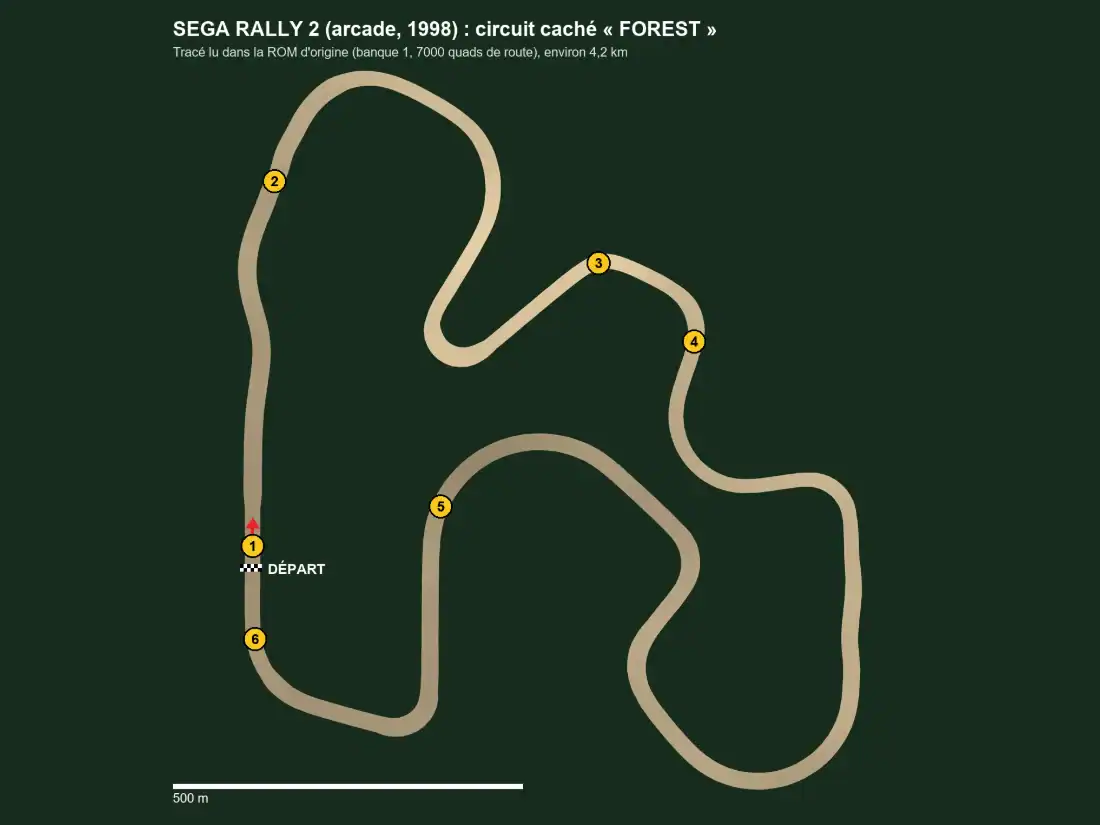
It turns out there was a fifth. In November 2026 an arcade owner going through the game’s original ROM chips found a complete, unused stage the game itself calls FOREST. Around 4.2 km of gravel and tarmac through pine forest and past cliff faces, sitting in the chips of every Sega Rally 2 board ever shipped, and never once offered to a player.
Background: a hit built on a hit
The first Sega Rally Championship (1995) changed arcade racing. Mixed surfaces, a co-driver calling the corners and handling that rewarded real rally technique made it one of Sega’s biggest driving games of the decade.
Sega Rally 2 was its big-budget sequel. Development started in March 1997 under producer Tetsuya Mizuguchi, the producer behind the original, with Kenji Sasaki directing and a team drawn largely from Sega AM Annex. It ran on Model 3 Step 2.0, with twin and deluxe cabinets, more cars and a new set of stages. It landed in Japanese arcades in February 1998, was a hit there, and came home to the Dreamcast in January 1999 and to PC later that year.
Fans noticed one thing missing. Forest had been a highlight of the first game, in the arcade and on the Saturn, but Sega Rally 2 had no forest stage. The Dreamcast port added two new stages, Muddy and Isle, and still no forest.
The clues were there in 1998
Looking back, the press saw Forest before players were ever denied it.
- Consoles+ issue 73 (France, February 1998) covered the game around its showing at Japan’s AOU show that month. Forum member Tibal, going back over those pages, noted the version shown already looked close to final, with only four cars on the menu.
- Computer & Video Games, March 1998 (UK), page 74 ran a preview boxout whose screenshot, as The Dreamcast Junkyard has since pointed out, shows the Forest stage.
- Mega Force issue 62 (France, 1998) ran Sega Rally 2 artwork that the discoverer recognised straight away: the cliff in the ad visual is on the Forest stage.
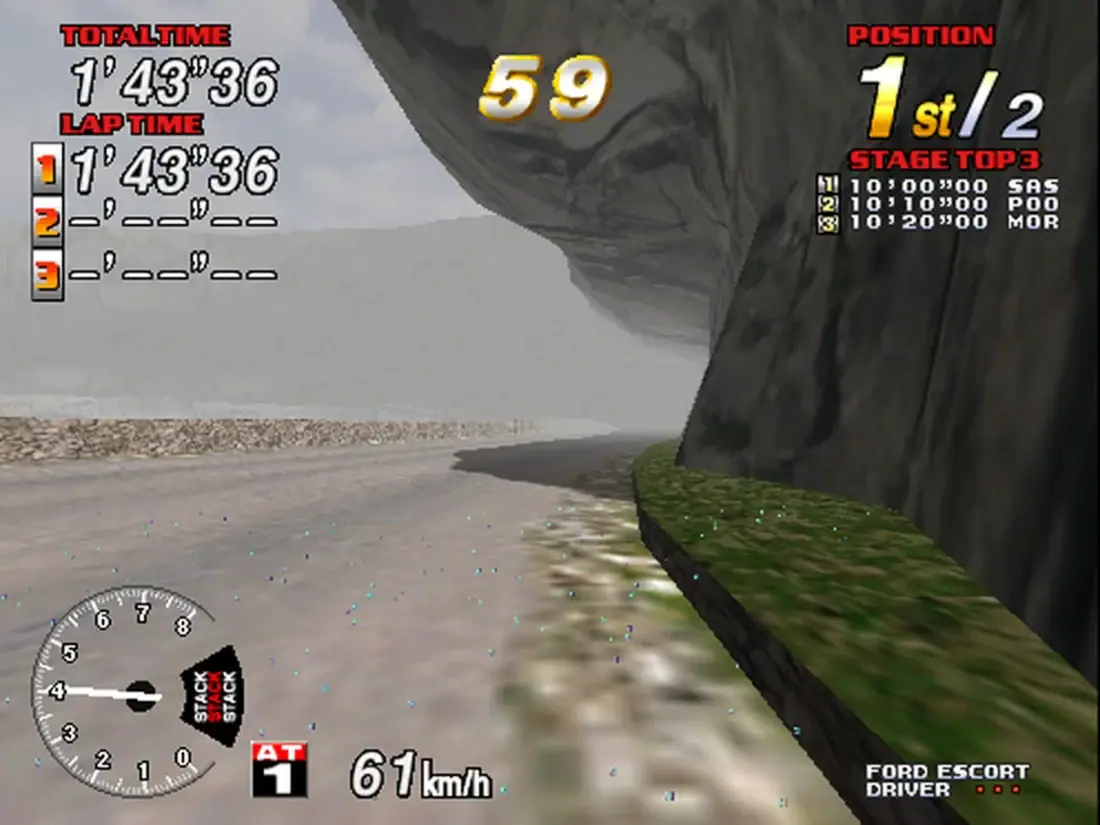
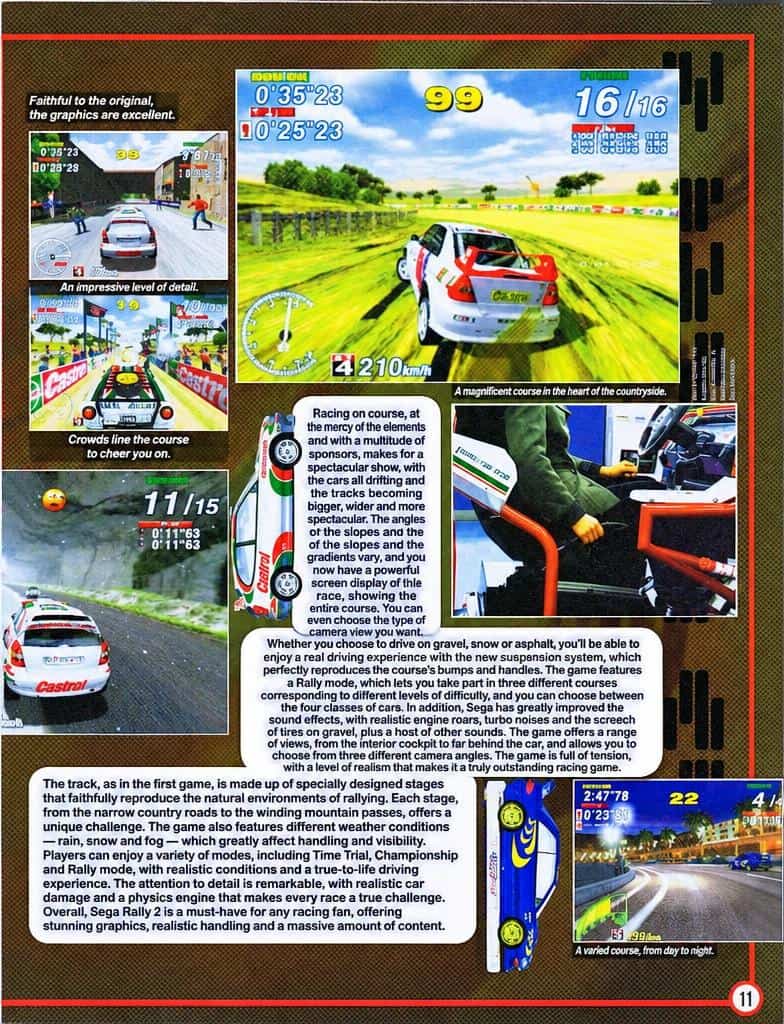
So the stage existed while the game was being shown to the press, and was used to sell it. Then it was quietly taken off the menu, but its data was left in the chips.
Why it was cut is still a mystery. There is no word from Sega. Forum theories range from “it did not play as well as the others” to “it looked too much like Mountain”. A reply on the Museum of the Game forum, from a member whose boss programmed the game, said the boss doesn’t remember it at all.
Who found it and how
The find belongs to Fred, known as fredarchi / fred.archi, a French Sega Rally 2 cabinet owner. On 15 November 2026 he posted it on the French arcade forum Gamoover and on the US Museum of the Game (Arcade Museum) forum.
Working through the program ROMs with the help of an AI assistant (Anthropic’s Claude, as he credits it), he matched every entry in the game’s internal stage table against its data. One entry, in the IC17 program ROM, didn’t line up with any of the four stages. It was labelled FOREST, and it pointed to a block of nearly 4 MB of course data that none of the playable stages used. Changing a few bytes in the stage list made the game load it.
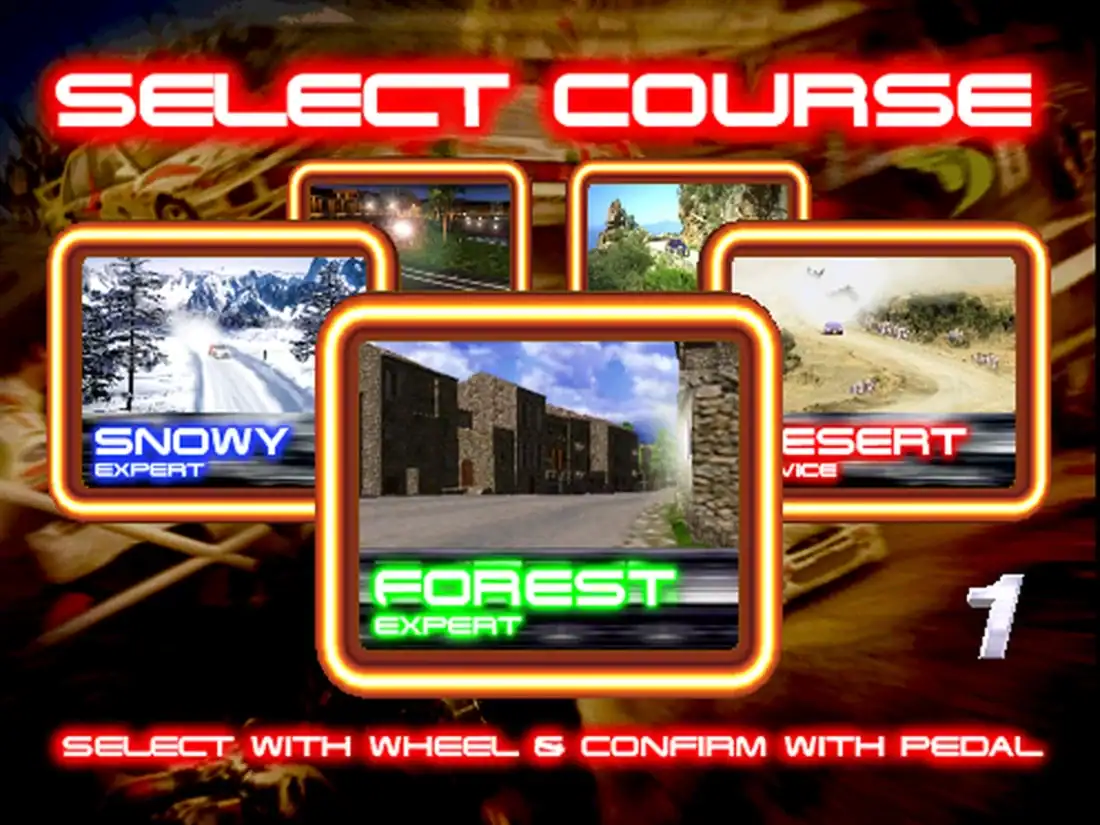
What happened next is the best part: the community picked it up within days.
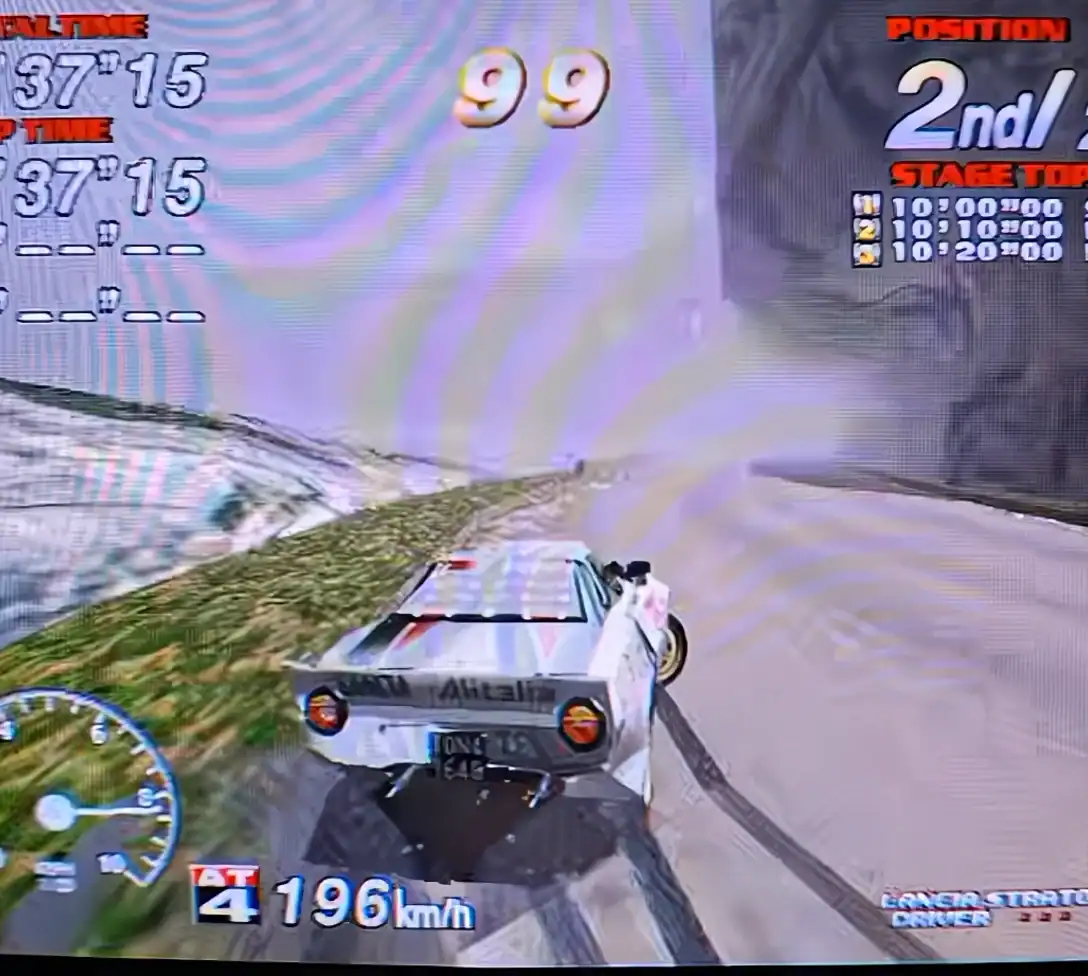
- Tibal dug out the 1998 magazine scans. By 16 November, the day after Fred’s first post, he was driving Forest in his own arcade cabinet, using the Supermodel emulator on a PC, and posted the video. The cabinet shot at the top of this article is from that video (image: Tibal).
- njz3, who maintains a fork of the Supermodel emulator, added a checkbox that unlocks Forest in Practice mode without touching the ROMs at all, then updated it to improve the look.
- Fr3d3r1c, who owns a stock Sega Rally 2 twin, polished the hack: the stage is named “FOREST INTERMEDIATE” on the menu, with the start sound, timer, co-driver calls, crowd, birds, end replay and ranking screen added or fixed.
- Sites including The Dreamcast Junkyard (UK) and Passa de Fase (Brazil) reported it within days, and players asked for it in the SegaRally2Native PC project.
How to play it today
There are two routes. Both start with a Sega Rally 2 ROM set you dumped from your own board. Sega’s code is still under copyright, so no download links here, and the people behind this work don’t post them either.
1. In emulation (easiest)
- Use Supermodel, the open-source Sega Model 3 emulator, with the standard export set (
srally2). - njz3’s fork of Supermodel adds a setting that unlocks Forest in Practice mode, with no ROM changes. The current build is linked in the Gamoover thread.
- The alternative is Fred’s modified program ROMs (IC17 to IC20), which add Forest as a fifth card on the stage menu. He has offered them to people who ask on the forum, rather than posting them publicly.
- It works in a cabinet too. Tibal runs a Windows PC with a Supermodel build, started from a one-click batch file, on his cabinet’s own screen and controls. Watch his video here.
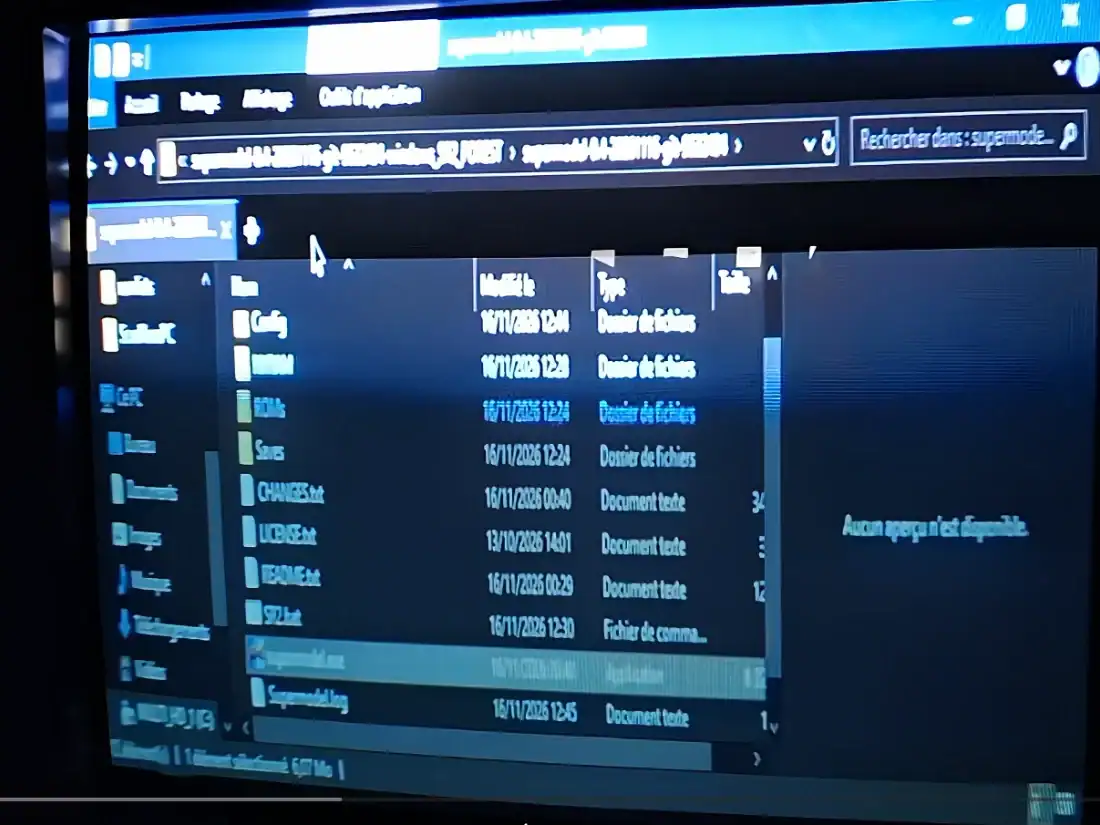
2. On a real cabinet (for owners with an EPROM burner)
- The stage data itself already sits in the original course ROMs (IC1 to IC4) on every board. Only the program has to change.
- Simplest option: reburn IC17 (a 27C160 EPROM) so Forest replaces Mountain in the championship.
- Full option: reburn IC17 to IC20 for the five-stage menu.
- Tibal has already driven Forest in a real arcade cabinet, with Supermodel running the game in place of the original board. As of 18 November 2026, nobody has confirmed a run on an original Model 3 board. Fred was waiting on blank chips, and force feedback on a real cabinet is still on the to-do list. Owners: back up your original chips first.
Still on the community’s list: rivals in Practice mode, the stage’s end-of-race scenes, a championship mode with Forest in it, and two small bugs (overlapping cards on the five-stage menu, and a car that sinks into the ground at the end of the replay).
Where now
The stage that nearly disappeared now has a whole community working on it. Fred and Fr3d3r1c plan real-cabinet testing. snicolast, who makes SegaRally2Native (a fan recompilation that runs the arcade game natively on Windows from your own ROM set), has said of Forest, “No promises, but I may take a look.”
Why emulation matters
The four stages that shipped were always going to survive. Forest nearly didn’t. It wasn’t on the menu, in any guide or in any port. It was a few megabytes of data on boards that are now nearly 30 years old, and each year more of those boards fail, their EPROMs fade and their owners move on.
It came back because people kept these games running and studied how they work: emulator authors who spent years documenting Model 3 hardware, collectors who scanned 1998 magazines page by page, cabinet owners who still dump and reburn chips, and new tools that make reading a program’s data faster than ever. Emulation doesn’t just keep old games playable. It lets people look inside them, and sometimes what they find was never meant to be seen. Without that work, Forest would have been lost for good, sitting on every board without anyone knowing.
Twenty-eight years on, you can finally drive the stage Sega showed the world in 1998.